Beyond the MFA Workshop: A Conversation with Novelist and Literary Luminary Aimee Liu
A writer in the world - real and virtual

Bookish annual and monthly subscriptions are 35% off through today, July 2.
July’s agent list will be published in the next few days. A preview of June’s agent list can be accessed here.
—
Substack has increasingly become a publishing platform and a gathering place for writers sharing their expertise about craft, literary culture, and the often opaque institutions surrounding contemporary writing life. With her generous and informative newsletter MFA Lore and her conversations with other authors on Well Published (via Substack live), award-winning novelist and nonfiction writer Aimee Liu has created a vibrant space within this community that blends reportage, literary- and publishing-related advice, cultural history, and personal reflection.
Alongside discussions of workshops, publishing, and creative identity, Aimee’s work consistently returns to larger questions about what it means to devote oneself to writing in a culture that often commodifies art and aspiration. In our conversation, Aimee and I discuss the origins of her Substack MFA Lore, her formative years, her diverse literary interests, and her impressive publication history, as well as the tensions between literary community and competition, and how these concerns intersect with her broader body of work as a novelist and nonfiction writer.
Christine/Bookish: What inspired you to start your Substack newsletter MFA Lore? Was there a particular gap in literary discourse—or perhaps a conversation you kept having privately—that spurred you to create it?
Aimee Liu: I began writing on Substack about 5 years ago as a sort of test kitchen for essays about my Chinese-American family. At the time I was also writing occasional craft essays over on Medium. Then I realized I could cross-pollinate, so I started revising those Medium posts for the Substack audience. After that, a few things changed.
First, I realized that quality lit mags require previously unpublished work, so I needed to stop testing my essays online. Second, I lost patience with the random sort of “boosting” over at Medium around the same time Substack was developing impressive features to help writers here build their publications. And third, I was starting to really miss teaching after my MFA program (and college) folded. It seemed to me at the time that George Saunders was the only one on Substack teaching craft to serious literary writers.
I don’t think my perception was accurate then— and it certainly isn’t now! — but it gave me the impetus to shift my primary focus here from “Legacy & Lore” to “MFA Lore, offering the essence of an MFA in creative writing, minus the tuition.”
My aim now on Substack is to echo my favorite aspects of the MFA experience.
I do this through the various sections of MFA Lore: insights into literary craft and the publishing industry [MFA Core]; frequent interviews with other authors and industry professionals [Well Published, live]; collaborative publishing [Writer in the World]; writing inspiration [Metaphotography Prompts]; and supportive, professional mentorship with a continuing workshop [Take 5]. I still miss my MFA program, but the MFA Lore community has grown into a pretty wonderful substitute!
CS: Your novel Glorious Boy was published in May 2020. What was the experience of releasing this well reviewed novel during the pandemic, and how did you get the word out (among other challenges, bookstores weren’t doing live events)?
AL: Glorious Boy is the novel I’m most proud of. It got the best reviews – starred reviews in both Booklist and Library Journal—and made a bunch of “Best of” lists in anticipation of its release. My publicist had an extensive tour of live events scheduled, and I’d spent months encouraging my friends and students to pre-order the book so it would have a strong launch.
Then the pandemic crashed down on us. All live events were canceled. Newspaper book reviews vanished along with book sections. Amazon simply erased all book orders, determining books to be “nonessential goods.” And the printing press was shuttered, so we only had a handful of copies on my so-called pub date.
We debated pushing the release date back to the fall. But at the time we had no idea when or if the lockdown would let up. And we predicted that so many other titles would be postponed, there’d be an avalanche by fall. So we decided to press on as best we could. Meaning, everything went online.
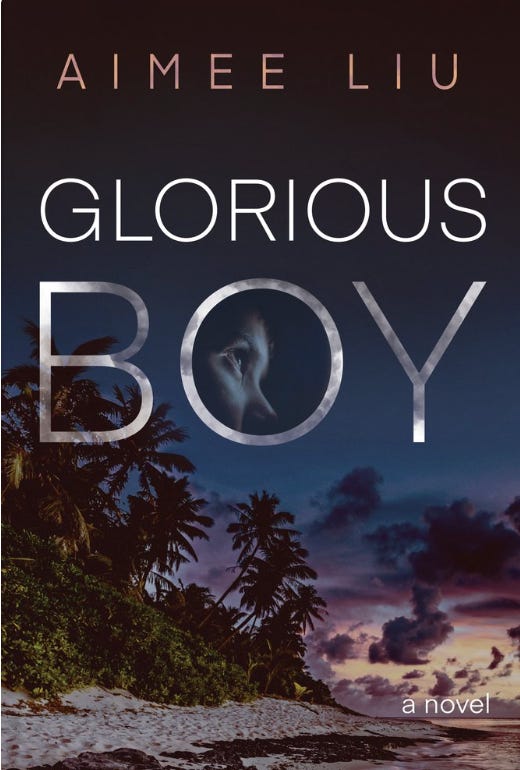
I did a virtual book party on launch day with Sandra Tsing Loh. Copies of the books had to be hand-delivered to Diesel Books; then I went alone and masked to sign them in advance so they could be mailed to the people who “attended” the launch. My publicist, Megan Beatie, was a champ, pivoting and doing her damnedest to line up virtual events, classes, book groups, and podcast interviews for me.
I was already on Instagram, and I dove into social media as best I could, posting my book with friends’ books. I joined forces with other authors through a group called Lockdown Lit, cross-promoting and offering mutual support to each other. And we ALL connected with A Mighty Blaze, the most amazing product of the pandemic, the virtual book promotion engine created by Jenna Blum and Caroline Leavitt in response to the lockdown.
It was a wild time. Everyone did the best we could. But virtual events are no substitute for live events when it comes to book sales. And reader reviews online are fabulous, but they simply don’t have the reach of reviews in major media outlets. And I don’t know anyone whose sales recovered from those early months when books were treated as “nonessential” commodities.
CS: Across your extensive body of work—novels, memoir, and criticism—what questions do you find yourself returning to again and again?
AL: I am forever trying to make sense of my connection to my father and the mystery of my Chinese heritage. This probably would not have the same pull for me if he’d been a talker. But like many Chinese men, he was reticent to a fault, and so much about him and his past remained a mystery even after he died. He held secrets that warped him and our whole family. Not in overtly traumatic ways but with confounding and quietly tragic results.
I had to probe and probe while [my father] was alive to get the details about his parents’ interracial marriage that I wove into my second novel, Cloud Mountain. (My first novel, Face, was a sort of warm-up act constructed out of my ambivalence and confusion about my Chinese-American identity.)
My third novel, Flash House, appears to be completely different – a Cold War spy thriller set in India and far western China—but the whole book revolves around the mysterious disappearance of a man who might have been my dad—everyone who knew him wondered if he’d been a spy. Even Glorious Boy, which has nothing overtly to do with my family, includes a father figure who grew up in Shanghai, where he was emotionally scarred by British colonial racism just as my father was.
I think every writer who grew up with a missing parent tends to obsess about that figure. My dad wasn’t physically missing but he was a bewildering shape-shifter—sometimes Chinese, sometimes British, never truly American— who always seemed to be emotionally hiding in plain sight. And because I’m so much like him in temperament, I naturally keep trying to write out what exactly he was hiding—and what I’m doubtless still hiding from myself.
CS: In Gaining: The Truth About Life After Eating Disorders, you wrote about disordered eating and our culture’s obsession with thinness, It was published in an era where many didn’t speak openly of their struggles with anorexia and bulimia. What were some of the challenges and joys of publishing and writing it?
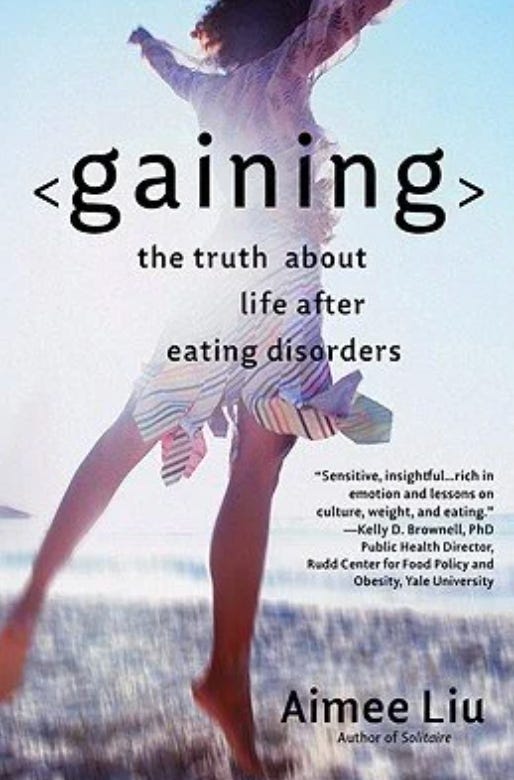
AL: I used to feel like I wore two very different writing hats. One belongs to my literary writing—fiction and memoir and personal essays. The other to the commercial nonfiction side of my writing life, which includes books like Gaining and more than ten books I’ve coauthored or ghosted. Three of my nonfiction books have dealt with eating disorders, including Solitaire, which was the first memoir about anorexia ever published.
After Solitaire, I shied away from the subject because I didn’t want to become a “professional anorexic,” but nearly thirty years later, after three novels, I realized I had a new perspective on eating disorders that was being validated by research but that no one had written for a lay audience.
So I wrote another “first” book on eating disorders, this time connecting the dots between this syndrome and temperament and genetics. When I sold the book, off a proposal, I figured it would be tonally similar to the self-help psych books I’d coauthored with a psychologist in the ‘80s and ‘90s. But then I decided to get my MFA, and this book became my thesis project. The result was a much more literary work than I’d envisioned and a much, much better book than any of my previous nonfiction.
So, you asked about challenges and joys. The process of elevating the quality of prose while folding in interviews and research was a challenge. But it was an incredible joy to discover relevant books by writers like Kafka, Karen Armstrong, Knut Hamsun, and Kay Redfield Jamison.
As I threaded their insights and quotes through my chapters, I discovered that my two hats didn’t need to be disconnected at all. I’m not sure this revelation changed my approach to fiction, but it strengthened and deepened my nonfiction in ways that I’ve carried through to the books and essays I’ve written in the years since. My standards are much, much higher than they were before I got my MFA!
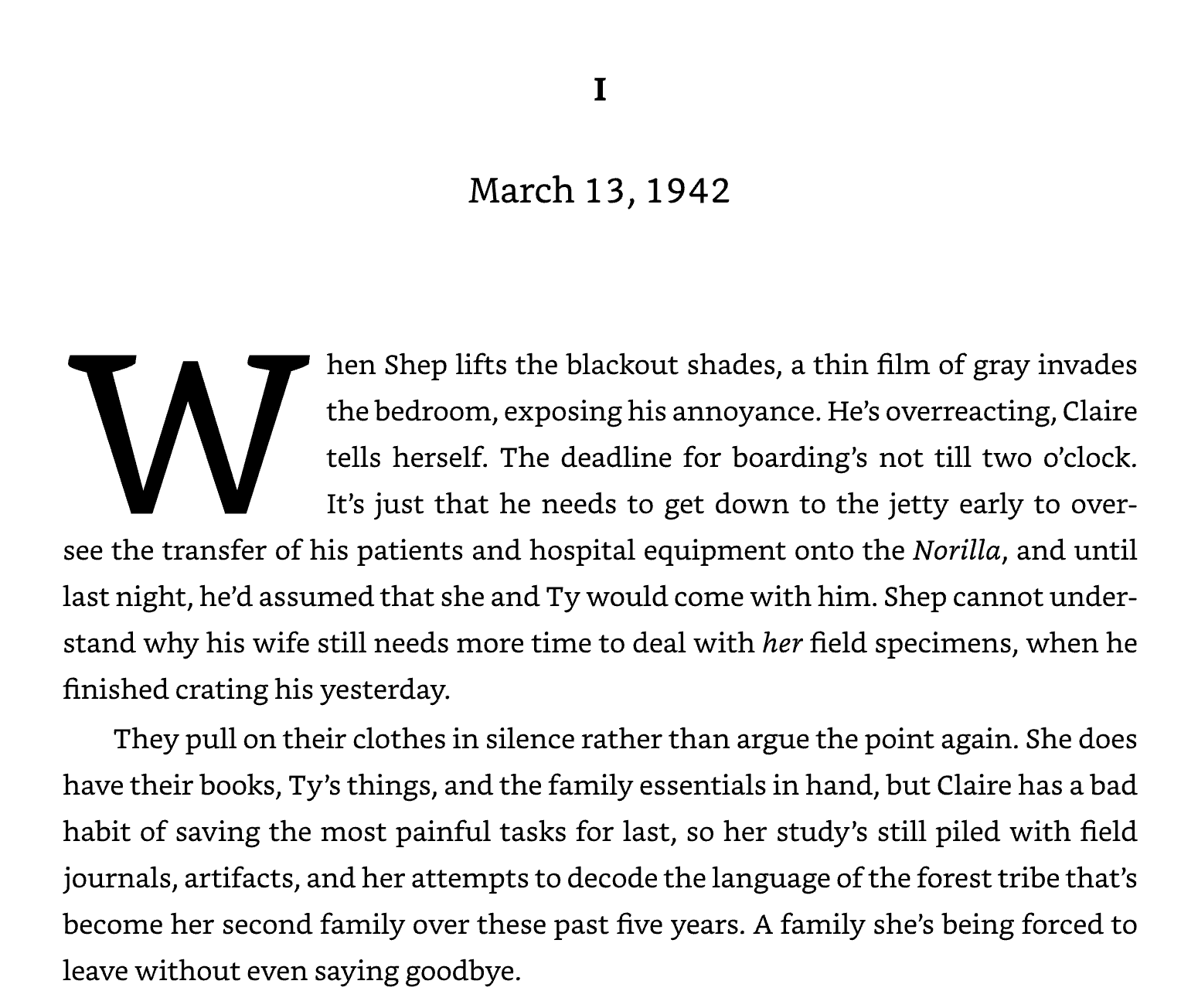
Opening to Glorious Boy: